CoverMax Blog

  • The 3 Portfolio Positions Every Smart DeFi Investor Uses

    The 3 Portfolio Positions Every Smart DeFi Investor Uses

    Want to grow wealth in crypto without guessing? These 3 strategic positions power the portfolios of successful DeFi millionaires—and you can start applying them today.

    Why Most DeFi Investors Stay Stuck (and How to Break Out)

    Let’s be real: DeFi can feel like a whirlwind. Between yield farming, staking, new coins launching every other day, and the constant FOMO, it’s easy to get stuck chasing hype—and harder to build real, long-term wealth.

    But here’s the truth. After spending years building portfolios through Covermax, talking to high-performing investors, and managing capital in all market conditions, I’ve noticed one clear pattern: the most successful DeFi investors organize their portfolios around three key positions.

    These aren’t get-rich-quick hacks. They’re proven frameworks that help you stay consistent, compound your gains, and actually understand what you’re doing with your money.

    1. Growth Positions: Your Engine for Long-Term Wealth

    This is where you lean into the upside of crypto. Growth positions usually make up the bulk of a strong DeFi portfolio—sometimes around 70 to 80 percent. They’re designed to ride market appreciation, not just collect fees.

    Think of pools like ETH/SOL or BTC/ETH. These assets move together more often than not, which helps avoid that dreaded divergence loss. You’re earning yield from liquidity fees while also holding onto assets that could run up big in a bull cycle.

    Smart investors track their growth performance in tokens, not dollars. Why? Because if ETH doubles and your pool exposure is solid, your crypto stack grows—regardless of short-term USD price action.

    2. Income Positions: Earn While You Sleep (With a Catch)

    Income positions are your cashflow machine. Here, the goal is yield—plain and simple. These are usually pools like RENDER/USDC or ETH/USDC where the stablecoin acts as a buffer and the APRs are often higher (sometimes 100 percent+).

    Now, higher yield usually means higher exposure to price swings. If the crypto half of the pool tanks, you’re holding more of it. But if you manage your entries and keep compounding your earnings, it balances out over time.

    We help our Covermax users automate this part, by identifying which income pools have the best combination of realistic APR and healthy liquidity. No guesswork, no hype chasing.

    3. Hodle Positions: Your Safety Net (And Your Moon Bag)

    There’s something powerful about just holding great assets outright. Not in a pool. Not staked somewhere exotic. Just holding.

    This position is your cushion. It protects you when everything else is volatile. Plus, when a token goes vertical—like RENDER after a product launch or BTC in a run—you’ve got direct exposure with no divergence loss eating into your gains.

    In the portfolios we manage at Covermax, we often recommend feeding income and growth profits into hodle bags over time. It’s the flywheel effect: earn yield, reinvest, build wealth.

    How to Start Structuring Your Portfolio Like This

    1. Growth Position (70–80%): Choose pairs with correlated crypto assets (like ETH/SOL).
    2. Income Position (10–20%): Pick stablecoin pairs with strong yield potential. Watch out for shallow liquidity.
    3. Hodle (Flexible): Use your earnings to build up long-term holdings of tokens you believe in.

    Use platforms like Jupiter, Raydium, or Orca if you’re just starting. They’re solid, low-fee, and Covermax integrates with them to help you make smarter moves faster.

    Need Help Putting This into Action?

    This strategy is what we teach and automate at Covermax. Whether you’re new to DeFi or trying to optimize your existing positions, we give you clear, simple tools to:

    • Identify top-performing pools (before everyone else finds them)
    • Track yield, divergence loss, and wallet performance in one place
    • Grow your portfolio with less time, noise, and risk

    Check out Covermax and start compounding like a pro—without spreadsheets or guesswork.

    The Bottom Line

    Forget trying to find the next pump-and-dump. Wealth in DeFi comes from structure, not speculation. Build your portfolio with growth, income, and hodle positions—and then keep compounding.

    The best time to start? Yesterday. The second-best time? Right now.

    Let me know how you’re thinking about your own DeFi strategy below. I’m always up for swapping notes with other builders and investors.

  • Boost Your DeFi Portfolio with Correlated Cryptocurrencies for Maximum Gains

    Boost Your DeFi Portfolio with Correlated Cryptocurrencies for Maximum Gains

    DeFi can be a rollercoaster. If you’ve been in the game long enough, you know that some days it feels like you’re winning big, while others leave you questioning every move. That’s exactly why I’ve been diving deeper into strategies that make my portfolio more resilient without sacrificing returns. And guess what? Correlated cryptocurrencies are one of the most powerful tools I’ve found — especially when paired with asset protection from CoverMax.

    If you’re new to the idea, or maybe heard about it in passing but never acted, this post is for you. We’ll break down what crypto correlation really means, why it’s a game changer for your DeFi portfolio, and how to integrate it alongside protection tools like CoverMax to actually stop the bleeding — and start winning.

    What is Correlation in Crypto and Why Should You Care?

    Correlation is all about how two assets move together. In crypto, when two coins are correlated, their prices generally go up and down in sync. This matters because if you’re pooling assets that move in similar ways, you’re reducing the chance of impermanent loss and optimizing your returns.

    • Perfect correlation (1.0): Assets like ETH and stETH move together almost identically.
    • Moderate correlation (around 0.6–0.8): Think ETH and WBTC — they don’t mirror each other exactly, but they tend to trend together.
    • No correlation: Assets like ETH and USDC move independently, which increases your risk when the market shifts.

    When you add CoverMax into the mix, your correlated assets are not just working for returns, they’re also protected from hacks and technical issues. Check it out at covermax.io.

    How to Identify Correlated Crypto Pairs

    There are a few tools I use regularly to spot these correlations:

    1. CoinGecko Charts: Overlay two coins and see if they’re moving in sync.
    2. Metrics Finance: Simulate pools with real-time performance based on correlation data.
    3. Internal Tool (coming soon from CoverMax): Our new correlation tool will let you compare the top 250 coins for quick strategy building — no guesswork needed.

    Example time — pair ETH with stETH and you’ll likely get tight price action and stable yield. Pair ETH with USDC and you might see a higher APR on paper, but the risk of divergence and impermanent loss shoots up.

    ETH and WBTC vs ETH and USDC: A Real World Showdown

    I recently tested this myself using two common pool setups. Here’s what I found:

    • ETH and WBTC: About ~60% correlation. Returns were smooth, range held strong, and I barely had to rebalance.
    • ETH and USDC: The APR looked higher, but the price volatility between the two made me lose out due to rebalancing and impermanent loss.

    If BTC hits $200K (yes, I’m optimistic), ETH will likely rise too. If you’re in a correlated pool like ETH/WBTC, you ride that wave. If you’re stuck in an ETH/USDC pool, half your capital just… sits there.

    Want to protect that capital? Make sure it’s secured using CoverMax while it works for you.

    How to Put This Strategy Into Action

    Ready to stop experimenting and actually build a smarter, safer DeFi setup? Here’s what I suggest:

    1. Head over to CoinGecko or Metrics Finance. Plug in your favorite token and look for another with at least 0.6 correlation.
    2. Compare their recent performance. Are they moving together over 30 days?
    3. Backtest using Metrics Finance or a spreadsheet. See how they hold up during upswings and dips.
    4. Provide liquidity in a tight range (±10%) to minimize exposure.
    5. Secure your deposit with CoverMax so if anything breaks, you’re not left holding the bag.

    Don’t just rely on APR screenshots — correlation and protection are what really keep your DeFi capital growing.

    Final Thoughts

    In a space like DeFi where everything can change in a minute, you need a strategy that balances returns and resilience. Correlated cryptocurrencies offer that sweet spot — especially when backed by smart tools and protection like CoverMax. I’m not here to just chase numbers anymore. I want my money working and protected, 24/7.

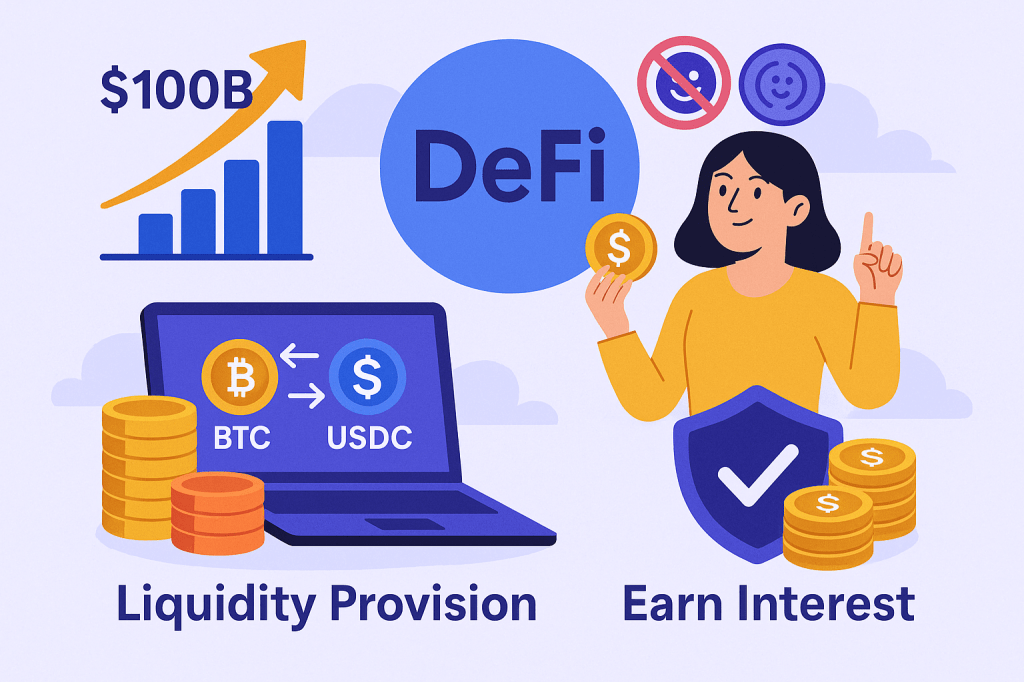
  • Unlock the $100B DeFi Wealth Transfer: How Retail Investors Can Earn High Yields Safely Through Liquidity Provision

    Unlock the $100B DeFi Wealth Transfer: How Retail Investors Can Earn High Yields Safely Through Liquidity Provision

    Why Most Crypto Investors Are Missing the $100B DeFi Opportunity

    Let’s face it. Too many crypto investors are chasing the next meme coin, hoping it will moon. But behind the noise, there’s a quiet wealth shift happening in decentralized finance, or DeFi. It’s already moving over $100 billion, and most of that value is being captured by investors who aren’t trying to gamble on hype coins. They’re earning real returns by providing liquidity to decentralized exchanges. The best part? With platforms like CoverMax, you can protect your digital assets and still earn interest while you do it.

    What Is DeFi and Why It Matters

    DeFi, or decentralized finance, is basically what it sounds like: financial services that run on blockchain networks without banks or middlemen. It lets anyone lend, borrow, trade or earn by using smart contracts on platforms like Ethereum and Solana.

    • Growth You Can’t Ignore: DeFi has surged from $15 billion to over $100 billion in total value locked (TVL) .
    • Not Just Hype: Unlike meme coins, DeFi projects offer real utility and are the foundation of crypto’s future.

    And here’s the kicker. Most of the meme coins you hear about? They trade on the same platforms powered by DeFi liquidity. So while others gamble, smart investors earn fees from their trades.

    How Liquidity Provision Works

    Liquidity provision means putting your tokens into a pool on a decentralized exchange (DEX) like Uniswap or Orca. These pools are what let people swap between tokens without a centralized exchange.

    As a liquidity provider, you earn a small fee every time someone uses the pool. Think of it like being the house in a casino — you get paid when others trade.

    • Uniswap: $5 billion in liquidity, $5.3 million in daily fees
    • Radium: $1.7 billion, $6.5 million daily fees

    And yes, retail investors can take part — no massive bankroll needed.

    Where CoverMax Fits In

    Here’s where CoverMax takes it to the next level. When you provide liquidity, you’re exposed to market swings. If something goes wrong — a protocol fails or a hack happens — CoverMax automatically protects your assets. There’s no need to submit claims or read confusing policies. Just deposit, earn, and stay protected.

    • Automatic payouts: If something breaks, you’re covered instantly.
    • Earn interest: Your assets don’t just sit idle. You earn even while they’re protected.
    • Unified protection: One platform, one smart layer of security across all your DeFi strategies.

    Debunking the Risk Myths

    Yes, there are risks in DeFi. But let’s break them down:

    • Impermanent Loss: Happens when the price of tokens in a pair moves apart. But it’s often offset by the fees you earn.
    • Fake APRs: Pools with flashy APR numbers often involve tokens that crash. Stick with blue-chip assets and stablecoins to stay grounded.

    CoverMax helps lower your overall exposure while you keep earning. That’s what we call smart yield.

    How to Get Started with Liquidity Provision and CoverMax

    1. Pick the right platform: Go with trusted DEXs like Uniswap, Radium, or Orca.
    2. Select your pool: Choose pairs like SOL/USDC or BTC/SOL. These are stable and high-volume.
    3. Provide liquidity: Deposit equal values of each token in your selected pool.
    4. Connect to CoverMax: Secure your assets and start earning passive returns with full protection.

    Bonus tip: Some DEXs let you stake your LP tokens for extra rewards. CoverMax still protects your assets even when staked.

    Conclusion: Don’t Miss the Shift

    DeFi is not just another crypto trend — it’s a structural shift in how finance works. And liquidity providers are at the heart of it. They aren’t chasing meme coin pumps. They’re earning real yield. Now, with CoverMax, you don’t have to choose between protection and profit. You get both.

    The $100 billion opportunity is already here. The only question is, will you let it pass or will you be part of the smart money movement?

    Join CoverMax Today: Protect your crypto and start earning. Sign up now.

    Want more tips? Subscribe for insights on DeFi strategies, yield opportunities, and how to stay safe in the decentralized world.